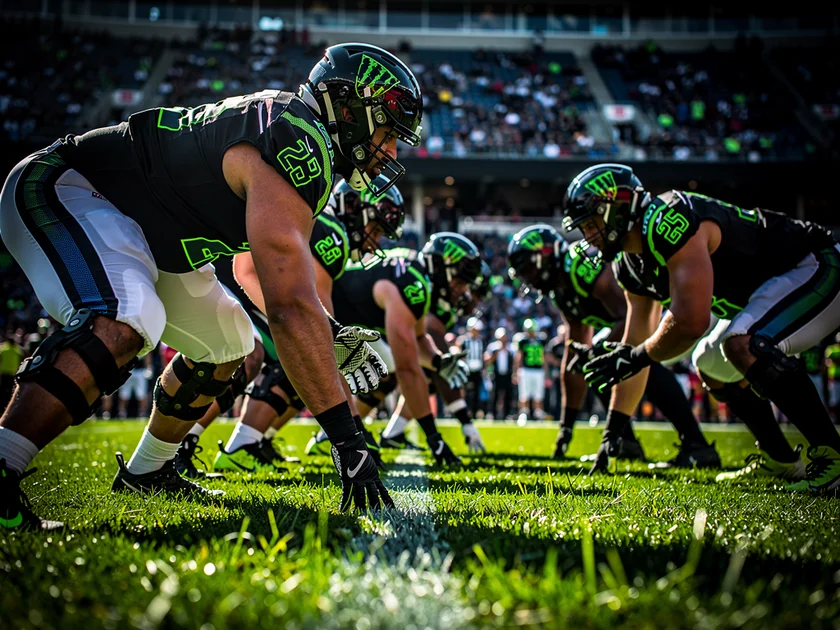
The Cincinnati Bengals enter 2026 free agency with their most urgent roster gaps in the trenches, according to NFL.com’s Jeremy Bergman. Bergman assessed positional needs for all 32 NFL teams and named the defensive line and interior blocking unit as Cincinnati’s top priorities.
His verdict was direct. “The Bengals need to toughen up in the trenches,” Bergman wrote. For a team that has leaned on skill-position talent to carry its offense, that gap has become hard to ignore heading into the new league year.
Why Cincinnati Must Fix Its Offensive Line
The interior blocking unit is a pressing concern. Depth behind the starters is thin, and several key pieces face free agency. The Bengals kept starting right guard Dalton Risner, securing at least one anchor up front. But interior linemen Lucas Patrick and Cordell Volson are both set to hit the open market.
Losing either player would leave a significant gap in Cincinnati’s blocking rotation. When a pocket collapses between the guards and center, even a play-action scheme loses its teeth. Risner’s return steadies the right side, but the Bengals cannot absorb the departure of both Patrick and Volson without a credible plan to replace them.
One path forward: sign a younger, cheaper interior lineman early in free agency. That approach carries risk. It also preserves cap flexibility for other roster needs. The front office will have to weigh both sides carefully before the market opens.
Bergman’s report covered all 32 clubs, and Cincinnati’s trench needs ranked at the top of its positional priority list. That placement reflects a pattern the numbers have shown for multiple seasons — the Bengals have entered drafts with unresolved interior line issues more than once in recent years.
Trey Hendrickson and the Defensive Line Picture
Read more: DK Metcalf and the Steelers’ Wide
The defensive line situation centers on edge rusher Trey Hendrickson. His future in Cincinnati is uncertain. After the team signed him to what Bergman called a “band-aid deal” last summer, the front office may now lean toward a trade and rebuild that production through multiple, less costly contributors.
Bergman’s phrase — “recreate him in the aggregate” — captures the likely calculus: spread the cap hit across several pass rushers rather than concentrate it on one. Two capable edge rushers who force offensive coordinators to account for both can generate more net pressure than a single high-priced rusher who draws double-teams on every snap.
Cincinnati’s defensive scheme benefits from depth over star power at the position. A Hendrickson trade would also free up cap dollars that could be redirected toward the offensive line or other front-seven additions. That is a salary cap decision with real downstream effects on how the rest of the roster gets built.
Key Facts From Bergman’s Bengals Assessment
Several specific roster items define Cincinnati’s free agency picture. Each fact below is drawn directly from available reporting.
- Bergman ranked the defensive line and interior blocking unit as Cincinnati’s two top free agency needs across all 32 NFL teams.
- The Bengals kept Dalton Risner, giving them at least one established piece at right guard heading into the offseason.
- Lucas Patrick and Cordell Volson are both at risk of leaving in free agency, which would thin depth at the interior positions.
- Trey Hendrickson signed a “band-aid deal” last summer; a trade is now viewed as a realistic outcome rather than a long-term extension.
Those four data points form a clear picture. The Bengals face decisions at multiple spots along both lines at the same time. That kind of overlap puts pressure on the front office to sequence its moves carefully — free agency first, then the draft, with cap space managed across both windows.
How Trench Needs Shape Cincinnati’s Draft Approach
Read more: Denver Broncos Will Keep Ben Powers
Cincinnati’s free agency decisions directly affect how the team approaches the 2026 NFL Draft. If the Bengals fail to land quality interior blockers or defensive front depth in March, the draft becomes the fallback — and pressure on those picks grows accordingly.
Joe Burrow’s long-term durability depends on the offensive line in front of him. A defensive front that cannot generate consistent pressure forces the secondary to cover longer, which raises the blitz rate and exposes man coverage on the back end. Both problems trace back to the same root cause: insufficient trench depth.
The most straightforward path combines at least one proven interior blocker signed in free agency with a front-seven pick in the middle rounds of the draft. Whether the front office follows that blueprint or prioritizes other spots will define Cincinnati’s competitive ceiling for the 2026 season. Bergman’s analysis has been explicit about where the gaps are.
What are the Cincinnati Bengals’ biggest free agency needs in 2026?
The Cincinnati Bengals’ top two free agency needs in 2026 are the defensive line and the interior blocking unit, according to NFL.com’s Jeremy Bergman. He assessed all 32 teams and wrote that the Bengals need to “toughen up in the trenches”.
Will the Bengals trade Trey Hendrickson in 2026?
A trade is possible. After signing Hendrickson to what Bergman called a “band-aid deal” last summer, Cincinnati may prefer to move him and rebuild edge-rush production through multiple less expensive players rather than commit long-term cap space to one pass rusher.
Which Cincinnati Bengals offensive linemen are entering free agency?
Interior linemen Lucas Patrick and Cordell Volson are both at risk of leaving Cincinnati in free agency. The Bengals did retain starting right guard Dalton Risner, giving them at least one established piece on the interior line heading into the 2026 offseason.
Who identified the Cincinnati Bengals’ free agency needs?
NFL.com’s Jeremy Bergman identified Cincinnati’s top positional needs in a report covering all 32 NFL teams ahead of the 2026 free agency period. He specifically called out the defensive line and interior blocking unit as the most pressing areas of need.