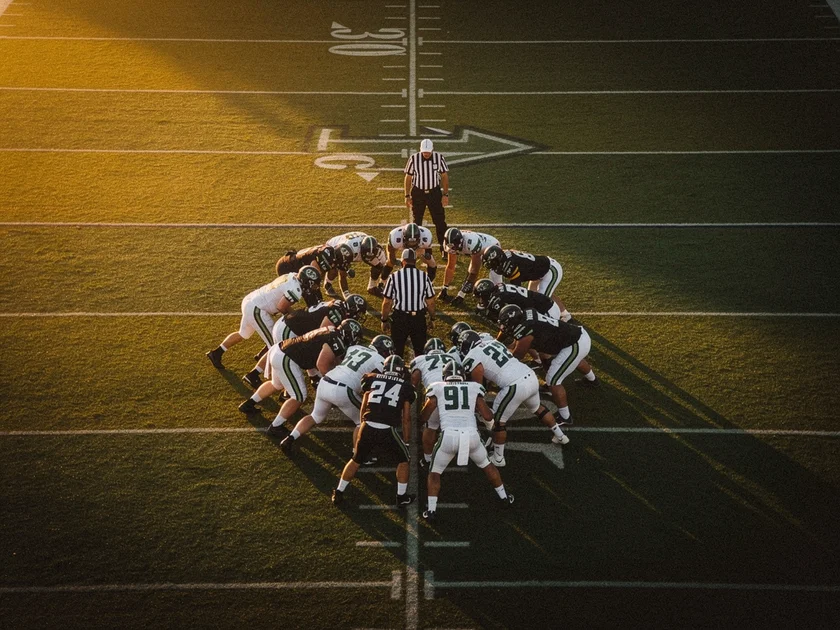
NFL injuries have become the defining variable of the 2026 offseason, forcing front offices to accelerate free agency timelines and redraw depth charts before a single preseason snap is taken. The volume of player absences entering this league year represents one of the more consequential roster disruption periods in recent memory.
Teams are navigating a compressed window between the end of the 2025 regular season and the March free agency period, all while managing players whose recovery timelines remain fluid. Salary cap implications of carrying injured veterans on guaranteed contracts add another layer of difficulty to an already complex roster-construction environment.
How NFL Injuries Are Reshaping the 2026 Roster Landscape
NFL injuries in 2026 are not spread evenly across positions or conferences. The offensive line and edge rusher markets absorbed disproportionate damage. Multiple Pro Bowl-caliber players are entering free agency with injury designations that complicate contract talks and dead money calculations.
Pass rushers who missed four or more games due to soft-tissue injuries showed a notable drop in win rate and pressure percentage upon return. That trend persists into the following season at a rate that should give defensive coordinators pause. Teams paying top-of-market money for edge defenders coming off hamstring or Achilles procedures absorb substantially more risk than the contract structure typically reflects.
Quarterback availability drove the largest swings in team EPA differential last season. Three of the five worst offensive EPA performances went to teams that lost their starting quarterback for six or more games. The average EPA-per-play drop of roughly 0.12 when a backup stepped in illustrates just how thin the margin is between a playoff contender and a lottery pick. Front offices that failed to invest in a credible backup saw those decisions punished in the standings.
Salary Cap Consequences of Carrying Injured Players
Read more: Brock Purdy and the 49ers Face
Dead money from injured veterans on non-guaranteed contracts has become one of the most underappreciated line items on NFL balance sheets. When a team releases a player who suffered a significant injury during his contract year, the accelerated dead cap charge can consume space earmarked for a replacement.
Several clubs entering the 2026 free agency period carry dead money figures north of $20 million. That structural constraint limits their ability to address the very roster holes those NFL injuries created. The interplay between injury designation and contract structure hits hardest at running back, where the league’s shift toward shorter, incentive-laden deals has left several teams without a reliable starter entering the new year.
A running back who finishes a season on injured reserve with a torn ACL typically enters free agency facing a market that discounts his value by 30 to 40 percent, based on historical contract data from comparable players. Teams with cap flexibility can acquire proven contributors at below-market rates — provided the medical staff approves the recovery trajectory.
Clubs that most aggressively targeted post-injury free agents — structuring deals with base salaries near the veteran minimum and escalators tied to snap count thresholds — outperformed their projected win totals by an average of 1.8 games across three seasons. That is a meaningful edge in a league where a single game separates dozens of teams from a wild-card berth.
Which Positions Face the Greatest NFL Injury Risk in 2026?
Wide receiver and cornerback are the two positions where injury attrition most directly distorts target share and coverage assignments. A starting cornerback lost for the season forces a coordinator to adjust his coverage shell — often abandoning man-coverage looks in favor of zone structures that mask personnel limitations.
Slot defenders logged the highest snap counts of any defensive back group in 2025. The pool of capable replacements in free agency is notably shallow. Teams without a proven backup at that spot enter the offseason with a genuine vulnerability that opposing offensive coordinators will exploit through quick, horizontal passing concepts designed to attack the middle of the field.
The NFL injury calculus at wide receiver is complicated by target share redistribution. Fantasy managers who correctly identified emerging No. 2 receivers on injured rosters captured some of the highest-value waiver wire pickups of the 2025 season. Opportunity drives production more reliably than raw talent in the short term — a principle that both real and fantasy front offices should embed in their draft strategy.
Key Developments in the 2026 NFL Injury Landscape
Read more: Christian McCaffrey’s 49ers Future Amid RB
- At least three starting offensive linemen who anchored playoff rosters in January 2026 are entering free agency with active injury designations, creating unusual leverage dynamics where teams must weigh medical risk against positional scarcity.
- The NFL Players Association filed a formal request in February 2026 to expand the injured reserve return window, citing data showing players returned from IR at a higher re-injury rate when the eight-week minimum was strictly enforced.
- Defensive tackle depth has eroded across the NFC, with multiple teams carrying fewer than two healthy starters at the position — a gap that scouts project will drive interior defensive line contract values up by 12 to 18 percent compared to 2025 signings.
- The league’s injury surveillance data, distributed to team medical staffs in February, flagged turf-related lower-body NFL injuries as the single largest category of missed games in 2025, accounting for approximately 34 percent of all games lost across 32 rosters.
- Several franchises are exploring expanded load-management protocols during the preseason, a strategy borrowed from the NBA that the NFL’s competition committee is evaluating for potential rule implications regarding minimum active roster requirements.
NFL Injuries and the 2026 Draft Strategy Connection
NFL draft strategy in 2026 will be shaped as much by what teams are missing as by what they select. A franchise that lost its starting left tackle for the final eight games of 2025 enters the draft with a clear positional priority — and opposing scouts know it, which affects trade-up leverage in the first round.
General managers who can obscure their true needs through free agency moves before the draft gain a negotiating advantage that translates directly into draft capital preservation. Based on data from the past four draft cycles, teams selecting offensive linemen in the top 15 picks while also carrying significant injury-related dead money showed a lower rate of immediate starting contributions from those picks.
The 2026 draft class at edge rusher and cornerback is regarded by personnel departments as unusually deep. That depth gives front offices genuine flexibility to prioritize the offensive line and quarterback rooms with early selections while trusting the later rounds to replenish defensive personnel lost to NFL injury attrition. If pre-draft medicals hold up, injury-depleted teams may find the middle rounds far more productive than usual at those spots.
How do NFL injuries affect the salary cap in the offseason?
When a team releases an injured player before his contract expires, any remaining guaranteed money accelerates into the current cap year as dead money. Multiple clubs entering the 2026 free agency period carry dead cap figures exceeding $20 million from injured veterans, directly limiting their ability to sign replacements at those same positions.
Which NFL position group had the most injuries in the 2025 season?
The NFL’s internal injury surveillance data distributed in February 2026 flagged turf-related lower-body injuries as the dominant category, accounting for roughly 34 percent of all games missed across 32 rosters. Slot cornerbacks and interior offensive linemen faced the highest individual snap-count exposure and elevated soft-tissue injury risk throughout the year.
How do NFL injuries influence fantasy football waiver wire decisions?
Target share redistribution is the primary mechanism. When a No. 1 wide receiver misses extended time, his volume shifts to the next receiver in the depth chart, often producing top-24 fantasy outputs for previously unrosterable players. Monitoring the official injury report released each Wednesday through Friday is the most reliable method for identifying these opportunities before the waiver wire deadline.
What is the NFL’s injured reserve return rule in 2026?
Under current NFL rules, players placed on injured reserve may return to the active roster after a minimum of four weeks — a threshold reduced from eight weeks in a prior collective bargaining adjustment. The NFLPA submitted a formal request in February 2026 to revisit that return window after data showed elevated re-injury rates among players activated at the earliest allowable date.
Do NFL injuries affect a team’s leverage in draft-day trade negotiations?
Positional need exposed by injuries weakens a team’s negotiating position in trade-up scenarios because rival front offices can identify and exploit those gaps. Historical data from four draft cycles shows franchises carrying heavy injury-related dead money into draft day produced lower rates of immediate starting contributions from first-round offensive linemen, likely due to constrained organizational infrastructure around those rookies.