

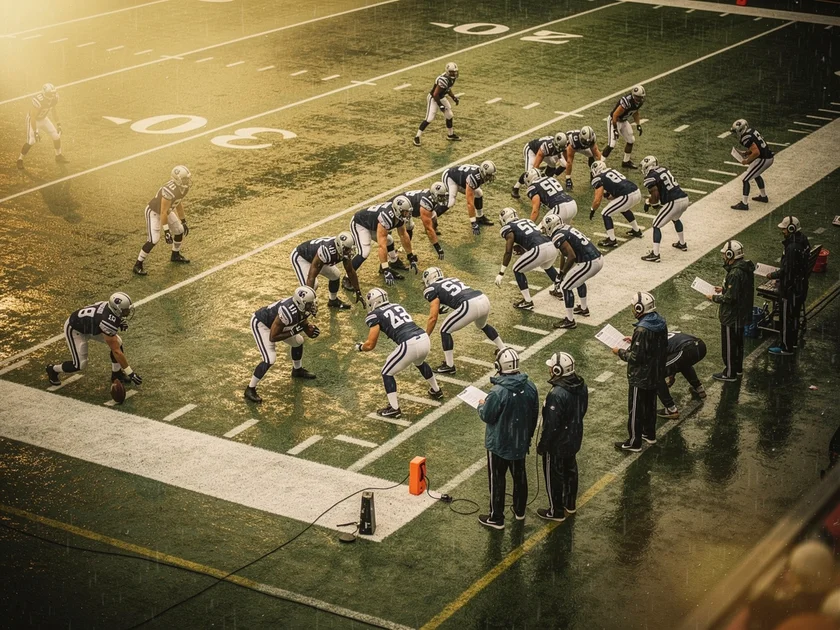
Klint Kubiak takes over the Las Vegas Raiders head coaching job as one of the most demanding roster reconstruction assignments in the NFL, with the franchise’s 2026 trajectory hinging almost entirely on how quickly the first-time head coach can install a coherent identity. Kubiak was announced as head coach and, within a week, had filled out a full coaching staff — a pace that drew notice around the league.
The Silver and Black have cycled through head coaches at a rate that would exhaust any front office. From Jon Gruden’s abrupt 2021 resignation to Rich Bisaccia’s interim stint, Josh McDaniels’ two-year washout, and Antonio Pierce’s abbreviated tenure, the Raiders have not had genuine coaching continuity since the Jack Del Rio era. Kubiak inherits that institutional scar tissue, along with a roster that needs significant cap restructuring and a clear schematic identity.
Why the Las Vegas Raiders Hired Kubiak for a Rebuild
The Raiders selected Kubiak specifically because he brings traits the organization believes it has lacked at the head coaching level — namely composure, collaborative instincts, and an offensive mind capable of developing young quarterbacks. The front office brass made clear they are committed to a full rebuild rather than a quick patch job, and Kubiak’s profile fits that longer arc.
Breaking down the advanced metrics from recent Raiders seasons reveals a pattern of offensive inconsistency that traces directly to scheme instability. Under McDaniels, Las Vegas ran a New England-derivative system that never suited the personnel. Pierce leaned run-heavy without the offensive line depth to sustain it. Kubiak, who developed his coaching resume under his father Gary Kubiak and later as an offensive coordinator, brings a zone-run, play-action framework that can mask deficiencies along the interior line while a rebuild progresses — a scheme fit the numbers suggest was missing for at least three seasons.
Kubiak’s Coaching Staff: Speed and Experience
Kubiak assembled his full coaching staff within days of his hiring, drawing on relationships built across multiple NFL stops. The rapid staff construction was deliberate — Kubiak wanted experienced coaches who chose Las Vegas rather than coaches who settled for it.
Kubiak addressed the staff-building process directly, saying: “I just learned that I’ve met a lot of great football coaches that wanted to come to work and be Raiders, that are going to help us be better. Having those relationships with those coaches, that’s what’s going to help us get going”. That language — “wanted to come” — carries weight. A franchise with the Raiders’ recent history does not automatically attract top coordinator talent, and the speed with which Kubiak locked in his staff suggests genuine buy-in rather than default availability.
The coaching staff’s collective experience across the league also addresses one of the Raiders’ persistent structural problems: a thin development pipeline. Las Vegas has not produced a Pro Bowl-caliber player from its own draft class since Maxx Crosby emerged in 2019. Position coaches with proven development track records can directly affect the team’s draft strategy analysis and whether mid-round picks become contributors or roster filler.
What Does the Las Vegas Raiders’ Roster Look Like Heading Into 2026?
The Raiders enter 2026 with notable salary cap implications that will shape every personnel decision Kubiak makes. Dead money from prior contracts has constrained the roster for two consecutive offseasons, limiting the team’s ability to address the offensive line depth and the secondary — both areas where the defensive scheme breakdown has exposed significant vulnerability.
Maxx Crosby anchors the defensive front as the one unambiguous franchise cornerstone. Beyond Crosby, the depth chart thins quickly. The wide receiver room lacks a true alpha, the offensive line remains a patchwork, and the linebacker corps has been rebuilt so many times that continuity at the second level is essentially nonexistent. Kubiak’s zone-blocking preferences could help mask the line’s limitations, but the numbers suggest Las Vegas will need at least two NFL Draft cycles to field a competitive roster across all three phases.
One counterargument worth considering: rebuilds under first-time head coaches occasionally accelerate faster than projected when a quarterback development story takes hold. If Las Vegas identifies its franchise quarterback — either through the 2026 NFL Draft or a calculated free agency move — Kubiak’s offensive background becomes a genuine accelerant rather than a long-term project. The Raiders’ draft position and cap flexibility, once the dead money clears, give the front office real options.
Key Developments in the Raiders’ Coaching Transition
- Kubiak filled his entire coaching staff within one week of being named head coach, an unusually fast turnaround for a first-time NFL head coach.
- The Raiders organization publicly cited specific traits Kubiak possesses that previous head coaches lacked, signaling a deliberate philosophical shift in the hiring criteria.
- Kubiak expressed confidence in both his own readiness and the quality of the staff he assembled, framing the coaching relationships as the primary engine for early progress.
- Las Vegas has not sustained a head coach beyond three seasons since the franchise relocated from Oakland in 2020, making organizational patience a variable that will define Kubiak’s runway.
- The Raiders’ Allegiant Stadium home-field context adds a financial and fan-engagement dimension to the rebuild — ownership has a revenue incentive to show progress before the 2027 season.
What Comes Next for the Raiders Under Kubiak?
The immediate priority for Las Vegas is the 2026 NFL Draft, where the Raiders hold meaningful draft capital and a pressing need at multiple positions. Kubiak’s offensive coordinator background will most directly influence how the team approaches the quarterback position — whether that means drafting a developmental prospect, selecting a day-one starter, or using the pick on a different position of need while pursuing a veteran quarterback through free agency.
Based on available data from the Raiders’ recent roster construction, the defensive scheme breakdown at cornerback and the offensive line depth represent the two areas most likely to receive immediate attention, either through the draft or the remaining free agent pool. The salary cap implications of any significant free agency move will require careful navigation given the residual dead money still on the books.
Kubiak’s self-awareness about the challenge ahead — captured in Sports Illustrated’s characterization of the Raiders’ head coaching position as “one of the most unique and most challenging in the National Football League” — suggests a coach who entered the role without illusions. That clarity, combined with a staff assembled on merit rather than familiarity, gives Las Vegas a foundation it has genuinely lacked. Whether the rebuild produces results within Kubiak’s first contract depends on draft execution, quarterback development, and a front office willing to give the process time to work.
Leave a Reply